Article
What Are Humans For?
By Khamid Mukhamedov
I was recently invited to a work event in Woerden, a town so small and unremarkable you could forgive a Dutch person for not knowing it exists. I heard it hosts an ancient Roman ship, but at first glance, the most special thing about Woerden was the size of its buses. Perhaps bus is a strong word for something that resembled more of a repurposed ambulance and drove accordingly. I have to admit, the landscape eventually sang a strong Gothic gospel, but the mist was still too thick to hear the choir.
After a few wrong turns with a map that couldn't decide which way I was facing, I finally reached the office. I was met with a smile I would expect to be reserved for old friends, and quickly accompanied to a warm room with good espresso. Some guests were already snacking, and a new person entered the room every time I took a sip. No two looked like they'd been in the same room before. The common denominator was that everyone's employer was more famous than Woerden itself. A few slightly awkward greetings later, we were twenty learning leaders around a table. The question on the table was serious: what are the human capabilities that artificial intelligence cannot replace?
By the end of the second hour we had answers. Critical thinking. Creativity. Someone said soft skills and the room nodded as if something had been resolved. I nodded too. After two hours and a brief exchange of QRs, it was time to go. I tagged along with one of the participants who knew the way to the station. I didn't need the map and ended up knowing more about Portugal by the time we arrived.
Later, waiting on the platform of the Woerden station, I felt something I couldn't quite name. Not disagreement exactly. Something closer to the feeling you get when you see the first train arrive, but have no idea if the 2-minute transfer in Gouda will hold. Why? Our question had a hidden assumption. We were describing what AI cannot do, at least not yet. But what happens when that yet gets an agent too? The real question is what humans offer that no level of capability can replace, regardless of how capable a system gets.
It has nothing to do with human skills. It has to do with the fact that we die. And as far as we can tell, we are the only thing in the universe that sees it coming. I found the answer in a city most of you have never thought about, from two women running a shop that had no right to exist.
Behind The Curtain
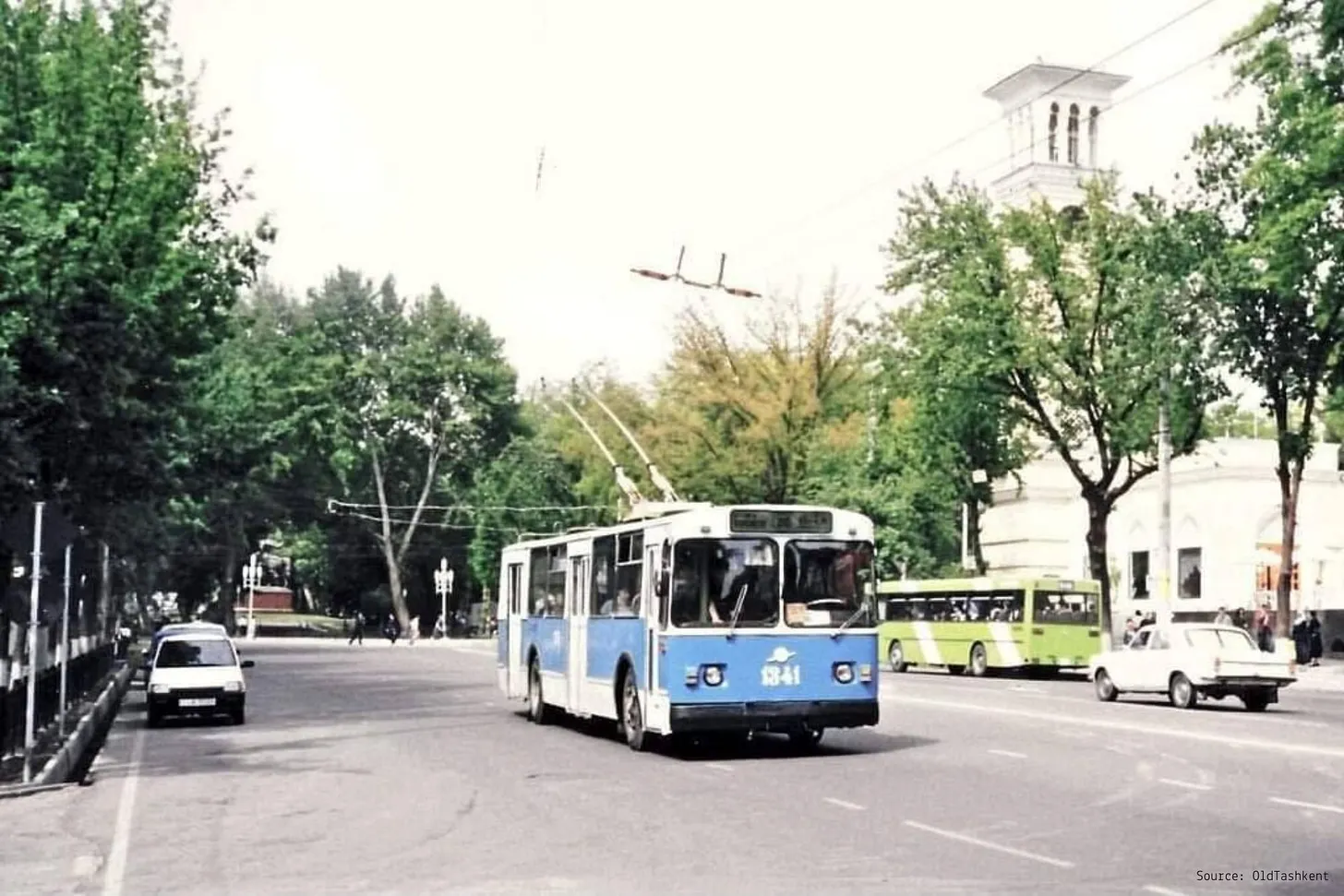
Growing up in a post-Soviet Tashkent, the question of where the films came from was not the question anyone was asking. It was whether you could see them at all. Yes, we had television, but it mostly played a carefully curated loop of some 20 French and Hong Kong actions next to the Moscow classics. To be fair to the new Big Brother, it wasn't all that bad, because you would get an occasional fresh hit like Krawczyk's Wasabi to entertain the crowds. And while his films are timeless, there are only so many times you can watch Jean Reno knock two Yakuzas out with a single golf swing (commercial break before, commercial break after) before you start looking for alternatives.
So where would you get your other films? The cracks in Uzbekistan's side of the iron curtain were still too narrow for the wifi to sip through. Blockbuster's camel didn't reach the Silk Road. But if you knew where to look, there was a small room where two women had assembled more of world cinema than anything else the city could offer. How did they get all that? I don't remember asking.
The Shop
The shop was on the ground floor of a Soviet institution, which was either the most Soviet thing about it or the least. There was always a line. Eventually you reached a heavy wooden door, and you were inside something that smelled of warm dust and vinyl, intensified by the specific stuffiness of a room that takes its heating seriously. It was narrow, even for a kid. Along the two walls on each side of the door were a few chairs. You waited while the grownups conducted what I can only describe as rapid fire consultations. Not for the lack of time, but due to the length of the menu.
Behind a wooden panel that separated the visitors from the inner workings, the two women held court: a computer, stacks of DVDs, a clutter that suggested a maze only they fully knew. They looked quite similar. Blonde. Stylish bob cuts. One slightly older than the other, but both the kind of age that to a child seems simply adult and to an adult now seems young. They knew everything that mattered in that room, which at the time felt like the same thing as knowing everything. If you were my height back then, you couldn't really see them at all unless they leaned over the panel to look at you, or unless you stood on those chairs.
What you could reach were the folders. Fat binders arranged by genre, each sleeve holding a DVD cover with a description on the back. This is where I spent my time, working through the children's folders with the seriousness the task deserved, while my parents stood at the panel discussing casting choices with the women for what felt like hours. Maybe that's why there was a line.
The discussions were not sophisticated in the way a film critic would recognize. They were better than that. Yes, the women knew every actor, every director, every plot. They could tell you how it ended. The mailman revelation was welcome. They knew what regulars liked and what they didn't. They would tell you plainly, but with a pinch of drama in the verdict: this cast is eye candy, this romance will make you cry, and hey kid, that cartoon is boring. They looked over at you from that panel with the confidence of people whose opinion had been tested by years of being right. You trusted them the way you trust someone who has never tried to impress you.
Going there was a weekly ritual. I looked forward to it the way children look forward to things that feel both ordinary and sacred. The cold air coming through the door each time a new visitor arrived. The warm light. The smell. The weight of the folders. The joy of holding a freshly baked DVD with a handwritten title locked in a plastic folder under your arm on the walk home. I didn't know then that I was experiencing something irreplaceable. You never do. That's the nature of irreplaceable things. They look like ordinary life until they're gone and then they look like everything.
The World Wide Web
At some point the curtain got holes big enough a truck could pass. Carrying Blu-rays. And digital projectors. Tashkent got its own version of Blockbuster and AMC. But owned by someone who didn't really care for business economics. Availability was real, price wasn't. So you would only visit for special occasions: fighting trucks on your new flat TV, blue aliens on the big screen with magic glasses. For the usual stuff you asked your parents to go to the shop. It was cheaper, and you knew the film of the day would be good.
General access to the World Wide Web was established, but treated as luxury. You could land a 50 dollar bill from your provider for playing California Gurls on Youtube. I still owe my dad two minimum wages. Local domains, however, were free of charge and had a library of films that could rival the shop. Films sorted by ratings, and reviews sorted by relevance from a thousand strangers you never knew. The only problem was that traffic speed was inversely proportional to the number of family members online. Availability was real, speed wasn't. So if you didn't want to wait to load the movie you may not even like, you asked your parents to go to the shop. The lines weren't so long anymore. It was faster, and you knew the film of the day would be good.
I don't remember the last time I was at the shop. Next week just turned into next month and at some point opening dot-com websites didn't trigger a financial incident. One provider became many. Suddenly clicking play and watching were not two events that required a dinner break in between. You could watch a review of Spiderman on Youtube. Availability was real. You didn't ask your parents to go to the shop. You pressed your toe on the button and booted Opera. The film of the day was a hit and miss, but you always had another shot.
One day, I was walking around the city with my friends, sharing worries and excitement of university applications. I saw the shop, door closed, no line.
"I used to get my movies here," I said, quietly realizing that I just gave a ceremony to something I didn't know I lost.
Because oftentimes it's how we part with something in life. Not with a remembrance speech, flowers and casket, but a simple I used to mentioned in a conversation with a friend. I don't have a photo of the shop, and you won't find it on Google maps. There are no reviews or a Forbes exclusive to tell you their story. There is no algorithm to decide if anybody should care for a shop that gave you a movie about a robot that believes old things should not be discarded. There is no algorithm to tell you what should not be discarded because it doesn't know what it is to be discarded.
A Second Life
The women are still there. I recently learned they never closed shop, just moved to a new location. They still have films, but supplying them is not their profession. In fact, it never really was but it took a long fibre cable and two decades to see. There is a new room now. I don't know where it is, and whether the door feels heavy. But with the price of fibre cables comes a lease to a world with no doors. Their room now extends to an Instagram page and a Telegram channel with a bio that reads "cinephiles widely known in narrow circles". There, to my greatest joy, I can still find 3-sentence movie verdicts with the same hint of drama I heard as a kid. Three hundred forty six members. My mom and dad amongst them.
They didn't just expand the menu, they rewrote it entirely. The films are still there, but the pinned service is something else. Reconstruction of grandfather's photographs. Digitalization of old family films. They are in the business of helping you burden the specific type of used to that will hurt the most.
A cultural cinematic archive. It's not just about hits anymore. They discuss films lost to time and viral search trends. The algorithm doesn't reward their content. But I do. Three hundred forty seven members.
All Roads Lead to One
According to the Shop's special "did you know?" feature, an average person spends a total of 55 days picking a series and 57 days picking a film throughout their life. Half of people end up watching nothing after. The solution? The shop invites you over.
Not because you can't get advice from TikTok. But because its algorithm can never feel the regret of spending 2688 waking hours of a very finite life on platforms that knew everything about you and still couldn't tell you what you needed to watch. Because an immortal system with no stakes on time can never truly encounter a mortal human.
Humans are not for the skills. They are for the specific presence of someone who knows what it is to forget your grandfather's voice. For finding that loss intolerable.
Humans are for being widely known in narrow circles.
Written by
Khamid Mukhamedov